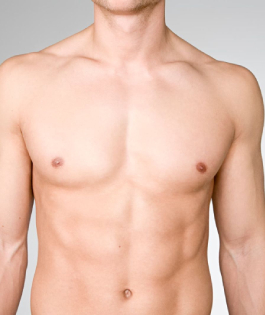
Male chest reduction (gynaecomastia)

Male chest reduction (gynaecomastia)

Male chest reduction

Enlarged breast tissue in men is more common than many people realise – affecting up to half of men at some point in their lives. It can develop during puberty, as a result of hormonal changes, weight fluctuation, or for no identifiable reason at all.

Whatever the cause, the impact can be significant: avoiding fitted clothing, stepping back from sport or simply feeling self-conscious. Chest reduction surgery can remove the excess tissue permanently, restoring a firmer, flatter chest and, with it, a greater sense of confidence.

What is gynaecomastia?

Chest reduction surgery – or gynaecomastia – is a procedure to remove excess breast tissue from the male chest. Depending on the composition of the tissue involved, this may be achieved through liposuction alone (for predominantly fatty tissue), through removal of tissue through a small incision around the areola, or through a combination of both. In more complex cases involving significant skin laxity, additional skin removal may also be required.

The result is a flatter, firmer chest that is better defined and more in proportion with the rest of the body.

Is chest reduction surgery right for you?

This surgery is suited to men whose chest enlargement has persisted despite changes to weight or lifestyle, and who are experiencing either physical discomfort – such as tenderness or chafing – or significant self-consciousness as a result. You should be in good general health and at or close to a stable weight. I ask all my patients to stop smoking – or using any nicotine products – from 4 weeks before procedures until 6 weeks after to avoid compromised wound healing and anaesthesia risks. 

It’s worth noting that gynaecomastia caused primarily by excess body fat – rather than glandular tissue – may not require surgery. I will assess your chest at consultation and advise honestly on whether surgery is appropriate and what approach would give the best outcome.

As a Consultant Plastic & Reconstructive Surgeon at Guy's & St. Thomas' NHS Foundation Trust, I approach chest reduction with the same attention to natural result and long-term outcome that I bring to all procedures.

Book a consultation

“Many of my patients tell me they’ve been thinking about this for years. My aim is to make the process feel clear, supported and straightforward from the first conversation.”

Consultation

We’ll discuss the nature and duration of your symptoms, your general health and your goals. I’ll examine your chest, assess whether the tissue is predominantly fatty or glandular, and explain which surgical approach is most appropriate. I may also recommend a blood test or imaging to rule out any underlying causes. I lay out your options and the decision on how to proceed is entirely yours.

Procedure

Chest reduction surgery is performed under general anaesthetic and typically takes around 1 to 2 hours depending on the extent of tissue to be removed. Most patients are admitted as a day case. Fatty tissue is removed via small liposuction incisions; glandular tissue, where present, is removed through a small incision around the lower edge of the areola. Additional liposuction and body contouring procedures may also be carried out during the same surgery.

Recovery and aftercare

You will wear a firm compression garment over your chest for 4 to 6 weeks after surgery. Most patients return to light activity within 1 to 2 weeks and exercise at 4 to 6 weeks. I provide personalised guidance on rest, wound care and nutrition, and follow-up appointments are included as part of your care.

Scarring

Incisions are kept as discreet as possible – typically around the areola, where they fade well. In liposuction-only cases, entry points are very small and barely visible once healed. Any scarring evolves and typically becomes much less noticeable over 12 to 24 months. We’ll discuss your expectations openly at your consultation.

Risks

No surgical outcome can be guaranteed, and I will always be transparent about what surgery involves. Possible risks include: 

  • Infection, bleeding or haematoma
  • Altered or reduced nipple sensation
  • Asymmetry or contour irregularities
  • Skin laxity if significant volume is removed
  • Recurrence if underlying hormonal or lifestyle factors are not addressed

I encourage you to ask questions at every stage. Being fully informed is an essential part of making a decision you feel confident in.

The results

Chest reduction surgery delivers some of the highest satisfaction rates of any cosmetic procedure for men. Patients consistently describe not just a physical change, but a shift in how they carry themselves – wearing clothing they avoided before, returning to sport and feeling more at ease in their own skin.

Results are visible immediately, with final definition settling over several weeks as swelling resolves.Results are generally permanent, provided your weight remains stable and any underlying cause does not return.

Patient review
“Miss Mughal was superb to me during my treatment. She was incredibly friendly and knowledgeable about my condition and treated me with so much care and consideration. I could not recommend her enough for any condition you may have!”

Your next steps

If you’re considering gynaecomastia, the most important first step is to understand your options.

For a clear picture of what to expect from each stage, explore the guides I’ve put together, including more details on preparing for surgery and the recovery process. 

When you’re ready to start the conversation, I would be glad to meet with you.

FAQ

Your questions, answered

1. Will I end up with loose skin on my chest?

No. Where the concern is primarily fatty tissue, liposuction tends to produce a smooth result with good skin retraction. Where significant glandular tissue is present or there is significant skin laxity, we can discuss the option of additional skin removal as part of your procedure.

2. What happens if I gain or lose weight later?

Surgically removed glandular tissue won't return. However, remaining fat cells can enlarge with significant weight gain, which may alter the result. Significant weight loss can also affect the chest if skin laxity was already borderline. Results are most stable when weight remains consistent – something I'll discuss directly at your consultation if your weight history is relevant.

3. How long until I can shower after the procedure?

You can shower from the day after surgery. I know this surprises some people, who expect to be told to avoid water for weeks. I'll give you specific guidance on how to manage your wounds and dressings. (Swimming and bathing are however off limits until your wounds are fully healed.)

Costs

The cost of chest reduction surgery varies depending on the complexity of the procedure, theatre time and your individual care requirements. Your quote will include the surgical fee, anaesthetic fee and hospital costs, as well as pre-operative assessment and post-operative consultations.