Breast uplift

Breast uplift

Breast uplift

Women’s bodies and breasts change over time. Weight fluctuation, pregnancy, breastfeeding and the natural effects of ageing can all alter their shape and position. 

If your breasts have lost their firmness or sit lower than they once did, a breast lift can restore shape, position and proportion.

For many women, the result is feeling more comfortable and themselves – not a different version, simply a restored one.

What is breast uplift surgery?

A breast uplift – also known as mastopexy – is a surgical procedure to reshape and reposition the breasts by removing excess skin and tightening the surrounding tissue. The nipple and areola are repositioned to sit at a more natural height on your newly contoured breast.

Unlike breast enlargement, a breast uplift does not significantly alter the size of the breasts. However, it can be combined with enlargement or reduction if you’re also looking for a change in volume. Liposuction and body contouring can also take place alongside this procedure if desired. We’ll discuss which approach best suits your anatomy and goals at your consultation.

Is breast uplift surgery right for you?

Women typically seek this procedure when their breasts have changed position or lost firmness following pregnancy or breastfeeding, after significant weight loss or simply over time. Common signs that a breast uplift may be right for you include nipples that sit below the breast crease when unsupported, breasts that have a flattened or elongated shape, or one breast that sits noticeably lower than the other.

You should be in good general health, have realistic expectations and ideally be at or close to a stable weight. If you’re planning a future pregnancy, this is something I will discuss with you carefully at your consultation. I ask all my patients to stop smoking – or using any nicotine products – from 4 weeks before procedures until 6 weeks after to avoid compromised wound healing and anaesthesia risks. 

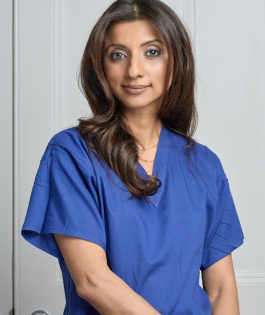
As a Consultant Plastic & Reconstructive Surgeon at Guy's & St. Thomas' NHS Foundation Trust, I bring a reconstructive perspective to every aesthetic procedure, focusing on proportion, symmetry and outcomes that look and feel natural. My aim is always to help you feel more like yourself – not to transform you into something else. Many of my patients also value the perspective a female surgeon brings to decisions so closely connected to body image and identity.

Book a consultation

“This surgery is about restoration. My role is to understand what has changed for you and to help restore what matters most.”

Consultation

We’ll discuss your concerns, lifestyle and goals, assess your anatomy, and decide together whether surgery is right for you and what outcome would best support your comfort and wellbeing. I lay out your options and the decision on how to proceed is entirely yours.

Procedure

Breast uplift surgery is performed under general anaesthetic and typically takes around 2 to 2.5 hours. Most patients are admitted as a day case. Excess skin is removed, the breast tissue is reshaped, and the nipple and areola repositioned. In some cases, the procedure is combined with a small augmentation or reduction to achieve the desired volume alongside the lift. Liposuction and body contouring procedures may also be carried out during the same surgery.

Recovery and aftercare

You will wear a supportive surgical bra for 4 to 6 weeks. Most patients return to light activity within 1 to 2 weeks and exercise at 4 to 6 weeks. I provide personalised guidance on rest, wound care and nutrition, and follow-up appointments are included as part of your care.

Scarring

All breast uplift techniques result in some degree of permanent scarring. The extent depends on the technique used: a periareolar (crescent) lift leaves a scar only around the areola; a vertical (lollipop) lift adds a scar running to the breast crease; an anchor lift includes a further horizontal scar along the crease itself. They evolve over 12 to 24 months and typically become much less visible over time. We can discuss your individual expectations openly at your consultation.

Risks

No surgical outcome can be guaranteed, and I will always be transparent about what surgery involves. Possible risks include: 

  • Infection, bleeding or haematoma
  • Altered or reduced nipple sensation
  • Asymmetry
  • Thickened or darkened scarring
  • Reduced ability to breastfeed
  • Changes to results over time, particularly after pregnancy or significant weight change

I encourage you to ask questions at every stage. Being fully informed is an essential part of making a decision you feel confident in.

The results

The results of a breast uplift are immediately apparent, though final shape and scars settle over several months. 

Patients describe a renewed ease and confidence thanks to breasts that sit where they should and feel like their own.

“Incredible surgeon, excellent results and very happy!”

Your next steps

If you’re considering breast uplift, the most important first step is to understand your options.

For a clear picture of what to expect from each stage, explore the guides I’ve put together, including more details on preparing for surgery and the recovery process. 

When you’re ready to start the conversation, I would be glad to meet with you.

FAQ

Your questions, answered

1. How long will the results last?

A breast uplift produces long-lasting results, but ageing, weight fluctuation and gravity continue to have an effect over time. Most patients find the improvement remains meaningful for many years. The factors most likely to alter the result sooner are significant weight change and pregnancy – which is why I generally advise waiting until your family is complete.

2. What happens if I gain or lose weight later?

Moderate fluctuations are unlikely to cause significant problems. Substantial weight gain can increase volume and stretch the skin again; significant loss can affect fullness and firmness. Neither is a reason to avoid surgery, but both are worth discussing at your consultation – particularly if you're anticipating a significant weight change in the near future.

3. How long until I can shower after the procedure?

You can shower from the day after surgery. I know this surprises some people, who expect to be told to avoid water for weeks. I'll give you specific guidance on how to manage your wounds and dressings. (Swimming and bathing are however off limits until your wounds are fully healed.)

Costs

The cost of breast reduction surgery varies depending on the complexity of the procedure, theatre time and your individual care requirements. Your quote will include the surgical fee, anaesthetic fee and hospital costs, as well as pre-operative assessment and post-operative consultations.